Industry Information
28
2024-08
Industry Information
What is Half-Cell Edge Passivation Technology?
Half-Cell Edge Passivation Technology (Passivated Edge Technology, PET) is a crucial technique used to enhance the performance of solar cells, particularly in the production of shingled solar cells. This technology forms a passivation layer at the edges of the cells, effectively reducing carrier recombination at the edges, thereby improving the photoelectric conversion efficiency and overall performance of the cells.Cell laser cutting can lead to increased edge recombination, especially when the emitter extends to the edges of the side-cut surfaces. The edges of the cells only have a naturally grown layer of silicon dioxide. For this reason, the goal of the PET process is to reduce the effective edge recombination velocity by depositing a passivation layer on the side-cut edges after cell laser cutting.The preparation of the passivation layer is one of the key steps in PET technology. Currently, the mainstream passivation methods include the following:Aluminum Oxide (Al₂O₃) Back Passivation: Depositing a layer of aluminum oxide film on the back of the cell as a passivation layer. Aluminum oxide has good insulation and chemical stability, effectively preventing charge recombination.Silicon Nitride (SiNx) Back Passivation: Silicon nitride is also a commonly used passivation material, known for its high light transmittance and excellent passivation effects. By depositing a layer of silicon nitride film on the cell surface, effective passivation can be achieved.Tunnel Oxide Passivated Contact (TOPCon) Technology: Depositing a very thin layer of silicon oxide on the back of an N-type silicon wafer, followed by a heavily doped polysilicon film, to achieve tunnel passivation on the back. This technology can significantly improve open-circuit voltage and fill factor.Heterojunction (HJT) Technology: Forming a heterojunction on an N-type silicon substrate using amorphous silicon as the passivation layer. Heterojunction cells have relatively high open-circuit voltage, and the outermost layer is prepared with a transparent conductive oxide (TCO), further enhancing cell performance.The application of half-cell edge passivation technology can significantly improve the fill factor (FF) of cells and reduce efficiency losses caused by laser cutting. For example, by using PET technology on the edges of shingled cells, gains in fill factor can be observed, especially after using thermal laser scribing (TLS) technology. Passivated cells show higher fill factor gains compared to untreated cells.Additionally, the stability of the passivation layer is crucial for the long-term performance of solar cells. Studies have shown that cells with a certain thickness of AlOx film exhibit minimal performance fluctuations over time, demonstrating good edge passivation stability.Disclaimer: The text and images used in this article are sourced from publicly available platforms such as the internet. If there are any copyright issues, please contact us for removal.
15
2024-06
Industry Information
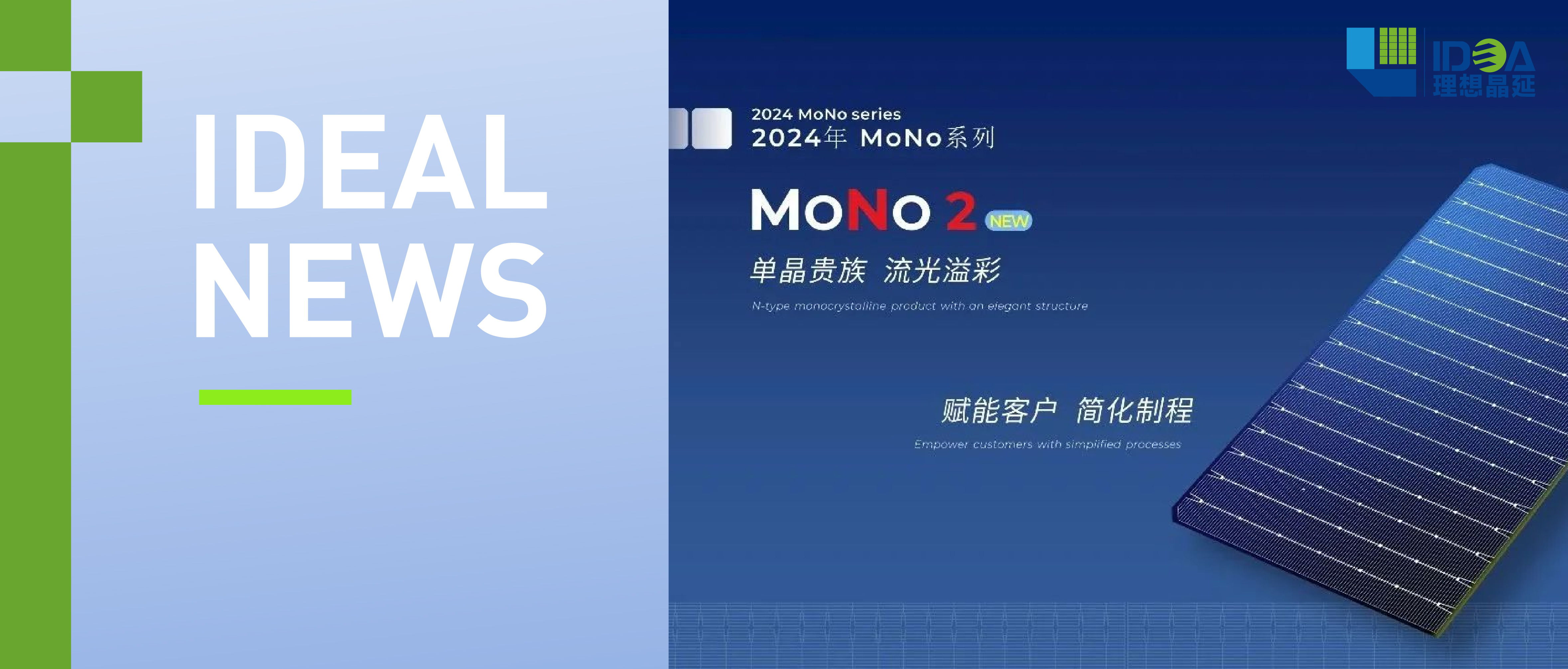
Ideal Deposition Congratulates Jietai Solar on the Global Launch of the New Generation "Mo No 2" Series Cells!
On June 14, 2024, Jietai Solar officially held the global launch event of its new product line, "N-Type Manufacturing, Never Stop," during the SNEC 17th (2024) International Photovoltaic Power Generation and Smart Energy Conference & Exhibition. The company unveiled its new generation "Mo No 2" series N-type TOPCon cell products and publicly released its R&D achievements in xBC and crystalline silicon-perovskite tandem cells for the first time.Jietai Solar's CTO, Mr. Yixiao Song, stated: "The 'Mo No 2' inherits all the core advantages of the 'Mo No 1' series and innovatively integrates Jietai Solar's self-developed J-HEP (Half-cut Edge Passivation) technology and J-WBSF (Wave Back Surface Field) technology. This has achieved comprehensive upgrades in multiple metrics such as cell passivation performance and bifaciality, helping to increase module power by over 6W and achieve a bifaciality rate of 90%, creating higher added value for customers."To flexibly adapt to the mainstream trend of half-cut modules, Jietai Solar's "Mo No 2" series has conducted in-depth exploration in cell cutting and application scenario optimization at the module level to achieve precise alignment with market demands.In terms of appearance, the "Mo No 2" adopts a half-cut design. Through the comprehensive application of J-HEP technology, it effectively repairs edge damage that may occur during the laser cutting process while reducing the module breakage rate and the proportion of EL defects caused by local defects. Testing and sorting the half-cut cells after HEP treatment can make the cell efficiency distribution more concentrated, further improving the fill factor (FF) and module power.Mr. Song emphasized: "Taking the standard 72-piece 182-size module as an example, whether it is a single-glass or double-glass module, the maximum output power can be increased by about 6W after half-cut passivation treatment."The passivation film does not affect the appearance of the module after lamination, ensuring product consistency and aesthetics, which holds significant application value and market potential in the highly competitive high-efficiency module market.Overall, compared to the "Mo No 1" series, the new generation "Mo No 2" cells have achieved comprehensive improvements in module power, reliability, and mass production yield. Test data shows that the key degradation metrics of this series, such as high temperature and humidity and thermal cycling, are far below IEC international standards, enabling the corresponding modules to achieve a power increase of over 6W.Here, Ideal Deposition extends its sincere congratulations to Jietai Solar on the release of its new generation products and the technological upgrades achieved! *Text and images are excerpted from Jet Technology's official platform.
25
2024-04
Industry Information
Edge Passivation Helps TOPCon Modules Set a New World Record!
Recently, the State Key Laboratory of Photovoltaic Science and Technology at Trina Solar announced that its self-developed 210+N-type i-TOPCon photovoltaic module, certified by the authoritative third-party testing and certification organization TÜV SÜD, has achieved a maximum output power of 740.6W, setting a new world record!Trina Solar stated that this record-breaking module adopts the latest generation of N-type advanced i-TOPCon cells, integrating innovative technologies such as laser-induced sintering, edge passivation, high-resistance dense grid, high-density packaging, and low-resistance connections. These advancements significantly enhance cell passivation effects, maximize optical utilization, and minimize electrical losses, leading to a substantial increase in module power and efficiency.Ideal Deposition extends its sincere congratulations to Trina Solar on achieving yet another innovative breakthrough! *Text and images are excerpted from Trina Solar's official platform.
1